
 NL
NL EN
EN FR
FR
Getting locked out is never fun, and it happens faster than you think. You pull the door shut behind you and at that very moment realise your keys are still inside. Or you may have lost them somewhere, the lock is jammed, or your key has even broken off.
What now? No worries! In this guide we help you with practical tips and safe methods to get back inside. And if nothing works, you can rely on a trustworthy locksmith to solve the problem quickly and without damage.
Contents
Locked Out? Don’t Panic!
Being locked out is an annoying situation that can happen to anyone. The most important thing is to stay calm and not panic. Panic can lead to rash decisions that cause more problems.
What to do if you’re locked out
- 1️⃣ Stay calm and take a moment to think
- 2️⃣ Check all entrances (front door, back door, windows)
- 3️⃣ Check if your keys might be somewhere else
- 4️⃣ Contact someone who has a spare key
When to call a locksmith immediately?
- ⚠️ If you urgently need to get inside (for example for medication or a pet)
- ⚠️ If it’s getting dark or the weather is bad
- ⚠️ If you don’t have a spare key and no one can help
Our locksmiths are available 24/7 and usually arrive within 30 minutes. We open your door without damage and at a transparent price.
How It Happens [3 Situations]
1. Key Forgotten or Lost
This is one of the most common reasons for a lockout. You leave the house in a rush, pull the door shut behind you and only then realise your keys are still inside. Or maybe you lost them on the way.
What can you do?
- 1️⃣ Check if you have a spare key with neighbours, friends or family.
- 2️⃣ See if a back door or window is still open (without forcing anything).
- 3️⃣ Check your bag or pockets again – sometimes they’re simply hidden somewhere.
If you really can’t find a key anywhere or use another entrance, scroll down for the solutions.
2. Key Left on the Inside of the Door
A very common problem with standard cylinder locks is that when a key is left on the inside of the door, it’s often not possible to open the door from outside with another key. This is due to how the cylinder mechanism works.
Why doesn’t the spare key work?
- 1️⃣ In a Euro cylinder, the position of the key on the inside determines whether the cylinder can be operated from outside.
- 2️⃣ When there is a key on the inside, that part of the cylinder remains engaged, disabling the outside.
- 3️⃣ When you try to insert a key from outside, it often won’t turn because the mechanism is already occupied internally by the inside key.
Watch a video demonstration of this problem here:
What can you try?
- 1️⃣ Push the inside key out: If the key on the inside is exactly upright in the lock, you can sometimes use extra pressure with another key from outside to push it out so it falls inside.
- 2️⃣ Don’t use brute force: If the key inside is not perfectly upright, this technique won’t work and too much pressure can damage or block the lock.
- 3️⃣ Watch your hands: Don’t use sharp or hard objects to push, as this may cause injuries.
When do you need a locksmith?
If the key inside is not upright or is jammed, a professional locksmith is the best solution. An experienced locksmith can open the door without damage so you won’t need a new lock or new keys.
Want to prevent this problem in future? Consider a double clutch cylinder that allows you to open the door even if there is a key on the other side.
3. Key Broken or Stuck in the Lock
You insert the key into the lock, turn and… crack! Part of the key remains in the lock. Or maybe you simply can’t pull the key out anymore. A broken or stuck key is extremely frustrating, but before you panic or use brute force, there are a few things you can try.
In this article we show you step by step how to remove a broken or stuck key safely, using both simple household tools and more advanced techniques.
Watch a video demonstration of removing a broken key here:
Try these solutions
Before you try to take the key out, you should first assess the situation properly. That determines the best approach and increases your chances of success.
1. Lubricate the lock
A well-lubricated lock reduces friction, which makes it more likely that you can remove the key.
- 1️⃣ For interior locks: Use a dry lubricant such as graphite powder.
- 2️⃣ For exterior locks: Use a silicone- or teflon-based lubricant such as TriFlow or Abus PS88.
- 3️⃣ Preferably avoid oil-based lubricants such as standard WD-40, unless there’s no other option. They can attract dirt over time and clog the lock.
Spray the lubricant directly into the keyway and wipe away any excess with a cloth.
2. Analyse the situation
- 1️⃣ Is part of the key sticking out of the lock? Then you have a good chance of removing it yourself.
- 2️⃣ Is the key fully inside the lock? Then it becomes trickier, but there are still options.
3. Use tweezers or long-nose pliers
- 1️⃣ Works well if part of the key is still visible.
- 2️⃣ Grip the key firmly with long-nose pliers or tweezers.
- 3️⃣ Turn the key gently back to the vertical position (12 o’clock).
- 4️⃣ Pull the key out carefully without wiggling too hard.
- ⚠️ Watch out! Don’t use tweezers that are too thick, as they can push the key further into the lock.
4. Use a paperclip or bobby pin
- 1️⃣ Suitable if the key is flush with the face of the lock.
- 2️⃣ Bend a paperclip or bobby pin into a small hook.
- 3️⃣ Insert it carefully into the keyway and try to hook onto the key.
- 4️⃣ Pull the key out bit by bit.
5. Use a jigsaw or fret saw blade
- 1️⃣ Suitable if the key is deeper inside the lock.
- 2️⃣ Cut a thin piece from a fret/jigsaw blade so the teeth are at the end.
- 3️⃣ Insert the blade into the keyway and try to catch the broken key.
- 4️⃣ Pull the key out using a gentle rocking motion.
6. Glue method (Not Always Recommended)
Sometimes you can remove a broken key using a glue stick.
- 1️⃣ Heat the end of a glue stick and press it gently against the broken key.
- 2️⃣ Wait 10 seconds for the glue to harden.
- 3️⃣ Pull the glue stick out carefully – hopefully the key comes with it.
- ⚠️ Do not use superglue! This can permanently glue the key into the lock.
When to call a locksmith?
Sometimes DIY methods don’t work, or you simply don’t want to risk extra damage. Call a locksmith if:
- ⚠️ The key is deep inside the lock and not visible.
- ⚠️ No tool can get a good grip on the key.
- ⚠️ The lock is damaged or doesn’t turn smoothly.
- ⚠️ The key has broken off in a high-security cylinder (special techniques required).
Need help right now?
Our experienced locksmiths are available 24/7 to help you! Call us now on 0484 57 79 90 or request a quote via our contact form.
Solutions [2 Methods]
1. Flipping: Opening a Door with Plastic Cards
Flipping is a technique where you use a thin, flexible plastic card to manipulate the latch of a door and gain access without a key.
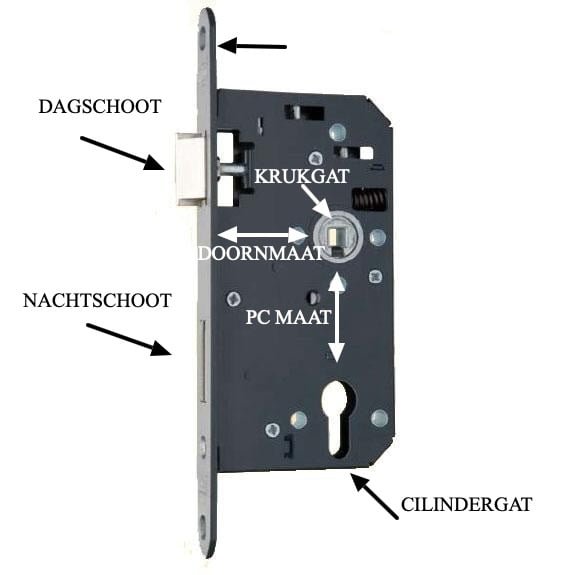
Step-by-step explanation for flipping
- 1️⃣ Choose the right tool: Use a bank card, gift card or shim card.
- 2️⃣ Place the card in the door gap: Insert the card at the height of the latch and bend it slightly.
- 3️⃣ Manipulate the latch: Slide the card along the angled side and push against the door.
- 4️⃣ Open the door: If done correctly, the latch will retract and the door will open.
Watch a video demonstration of the flipping technique here:
When flipping doesn’t work
- ⚠️ The door is fully deadlocked.
- ⚠️ An anti-flip strike plate has been installed.
2. Fishing: Opening a Door via the Letterbox
Fishing is a clever technique where you use the letterbox to open the door from the inside. You use a long, flexible tool to pull the interior handle down.
When does this work? This method only works on standard European doors with a regular handle and a letterbox that is at the right height and distance from the handle.
Step-by-step explanation for fishing
- 1️⃣ Choose the right tool: Use a long and flexible, but sturdy object such as:
- A rigid tube or rod with a hook or loop at the end
- A bent clothes hanger or strong metal wire
- A special fishing tool
- 2️⃣ Insert the tool through the letterbox:
- Feed the tool through the letterbox opening
- Move it towards the handle
- Position it to hook onto or around the handle
- 3️⃣ Pull the handle down:
- Pull gently but firmly, just as if you were using the handle normally
- 4️⃣ Open the door:
- Once the handle is fully pressed down, the lock will release
- Push the door lightly to open it fully
When fishing doesn’t work
- ⚠️ The door is fully locked (deadbolt engaged)
- ⚠️ There is a letterbox guard that blocks access to the handle
- ⚠️ The handle is too far away from the letterbox
- ⚠️ There is security hardware that shields the handle
If fishing doesn’t work or you’re unsure, it’s better to call an experienced locksmith to avoid damage. We open your door quickly and without damage – call us directly!
Is a Lockout Covered by Insurance?
Good news: in many cases you can indeed rely on your home insurance when you’re locked out. But there are a few important points to pay attention to.
What is usually covered?
With most insurers, the costs for a locksmith are included in the basic cover of your home insurance. That means:
- ✅ The intervention of a locksmith in case of a lockout
- ✅ Travel costs
- ✅ The actual opening of the door
Note: some insurers only cover these costs once a year.
What is not covered?
- ⚠️ If you need a new lock because it is damaged or because you lost your keys, your insurer will usually only contribute if you have additional cover for theft and vandalism.
- ⚠️ If you call a locksmith yourself without contacting your insurer first, you may have to pay the costs yourself.
How should you proceed?
📞 Always call your insurer first, before you hire a locksmith. The assistance service is available 24/7 – you’ll find the number on your policy or on the insurer’s website.
They usually refer you to an approved locksmith they work with. If you ignore that advice and call someone yourself, there’s a real chance you’ll have to pay the bill yourself.
Is there an excess?
With many insurers there is no excess for locksmith interventions. That means you don’t have to pay an extra amount out of pocket. Check the general terms and conditions of your policy to be sure.
In short
- ✅ Costs of opening the door are often reimbursed
- ✅ Sometimes without excess
- ✅ One intervention per year is often covered
- ⚠️ Replacement of the lock is often only covered with extra theft cover
- ⚠️ Call your insurer first, otherwise you risk no reimbursement
How We Can Help You
As experienced locksmiths in Ghent and surroundings, we are available 24/7 to help you when you’re locked out. We arrive quickly and solve the problem without damage.
Our services in lockout situations
- 1️⃣ Fast, damage-free help: We open doors without damage.
- 2️⃣ Fixed prices: No surprises afterwards.
- 3️⃣ Advice and prevention: We also help you with tips to prevent lockouts in the future.
- 4️⃣ Lock replacement: If needed we can immediately install a new lock.
- 5️⃣ 24/7 emergency help: We are available day and night for urgent situations.
How we work
- 1️⃣ Contact us: Call us on 0484 57 79 90 or fill in the contact form.
- 2️⃣ Fast arrival: We are usually on site within 30 minutes.
- 3️⃣ Diagnosis: We analyse the situation and determine the best solution.
- 4️⃣ Damage-free opening: We open the door without causing damage.
- 5️⃣ Advice: We give tips to prevent future lockouts.
Need help? Call us now on 0484 57 79 90 or request a quote via our contact form. We are available 24/7 to help you.